 Smart City Africa
 Urban governance beyond dashboards
Why data, participation and accountability — not vendor-built command centres — are the real governance product African cities need.
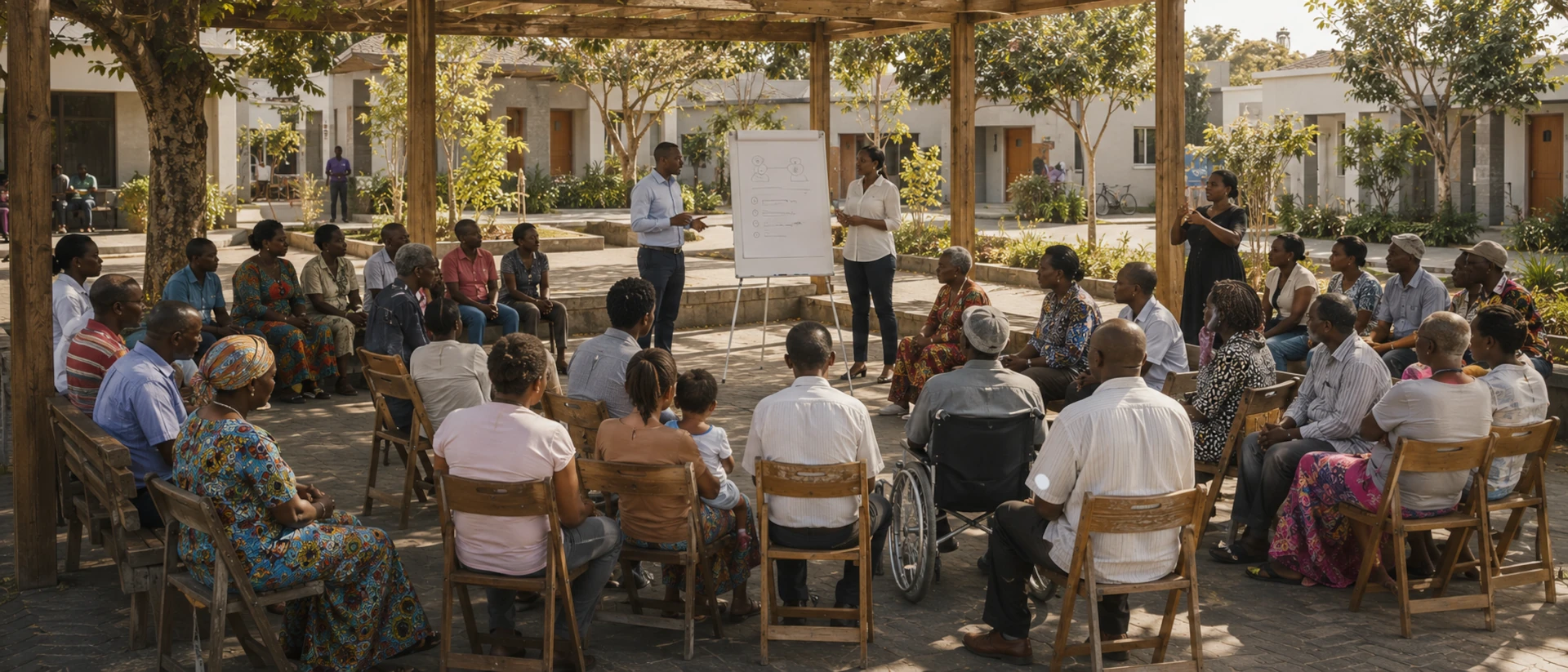
Smart-city programmes in African cities have a long-running habit of arriving as a screen. A control-room dashboard is set up, sensors and feeds are wired in, a ribbon is cut, and the underlying decisions of the city — who gets connected, who gets evicted, whose neighbourhood is policed in what way — go on as before. The repeated lesson from reviews of these programmes is that the dashboard is not the governance product. The governance product is the rules under which the data is shared, the people who can act on it, and the accountability that follows.
The OECD frame for digital government sets a useful baseline: open, transparent, participatory, trustworthy. Each of those is a design choice. Open and transparent require legal mandates for data sharing across departments and credible publication of decisions. Participatory requires service interfaces and engagement processes that work for citizens with low bandwidth, low income and limited time, not only for digitally fluent middle-class users. Trustworthy requires data protection, oversight and clear redress when systems fail or harm people.
UNECA’s framework for digital urbanisation matches this in city-relevant terms: digital infrastructure, affordability, digital skills and e-government as four interlocking dimensions. None of them is a technology problem in isolation; all of them are governance problems that happen to have technology components.
The cautionary side is well documented. Cambridge research and other reviews of smart-city programmes in African cities repeatedly flag that digital technologies, poorly regulated, can deepen rather than reduce inequalities — concentrating data with private vendors, surveilling exactly the populations that already had the weakest civic protection, and locking in proprietary infrastructure that is expensive to leave.
The practical brief for a city programme is therefore unglamorous and indispensable. Get the legal mandates right. Build interoperability and open standards into procurement. Publish what is being measured and how. Invest in the staff capacity that turns data into decisions. Treat participation as a permanent operating feature, not a one-off consultation. The dashboard, if it appears at all, comes last — and is the least interesting part of the system.
Sources
- OECD — Recommendation on Digital Government Strategies (open, transparent, participatory, trustworthy).
- UNECA — framework for digital urbanisation (four dimensions).
- Cambridge research and related reviews of African smart-city programmes (digital inequality, rights and inclusion risks).
- UN-Habitat — People-Centred Smart Cities Guidelines.
Talk to us about applying this in your city.
Which themes fit best is highly city-specific. Tell us a little about the city, the partners involved, and what kind of decision you're trying to make. We'll come back with the right entry point.