 Smart City Africa
 Resilient buildings and the African codes problem
Why building codes — not new technology — are the binding constraint on safe, accessible and climate-ready African urban infrastructure.
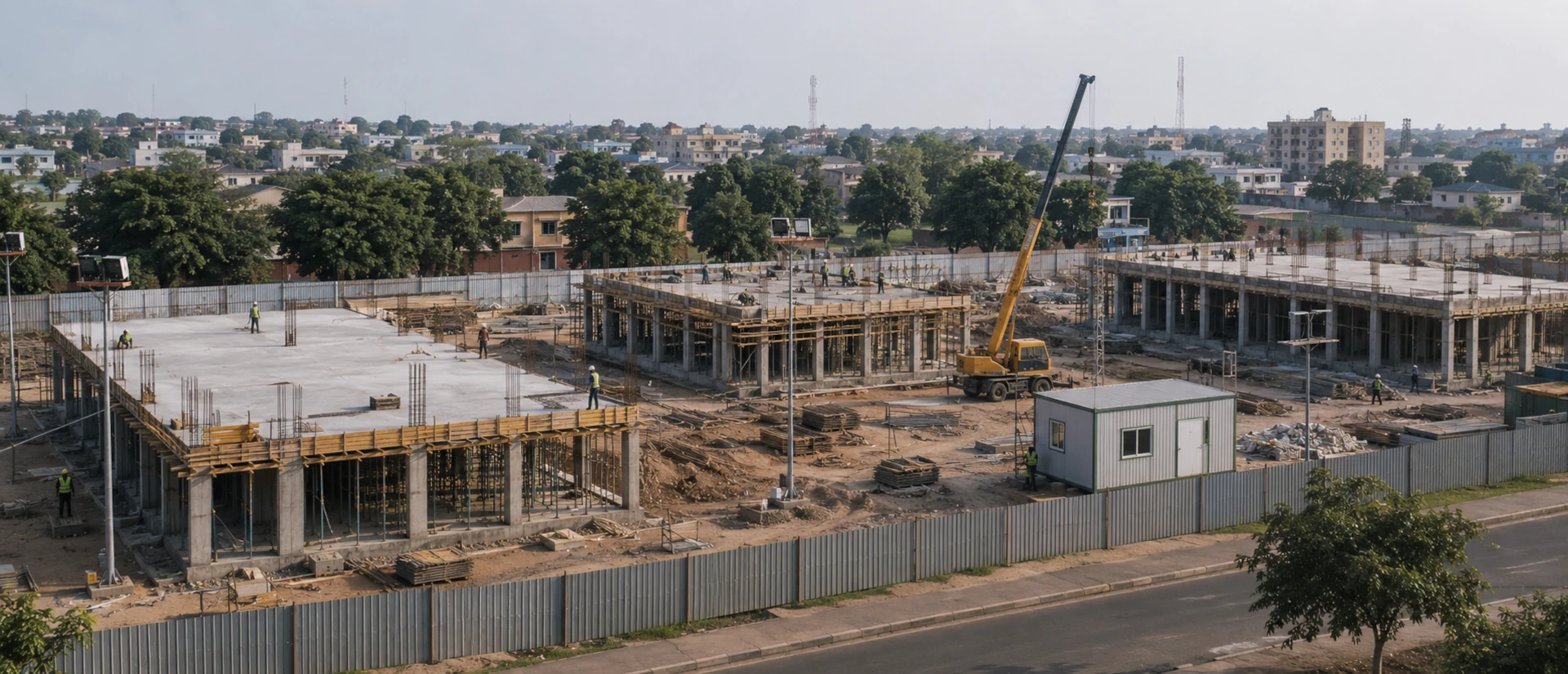
The built environment is where most urban climate risk, public-health risk and inclusion outcomes are actually decided. It is also the part of the urban system where the gap between what is on paper and what is built is largest, and where the cost of getting it wrong compounds for decades.
The scale is unforgiving. The World Bank estimates that global building floor area will more than double by 2060, with around 88 billion square metres of new construction needed in Africa alone to absorb population growth. World Bank and World Resources Institute analysis indicates that roughly 70 percent of African cities face severe climate risks — heat, flooding, water stress and the cascading damage that follows. And the public-service backbone is still under-built: only about a third of urban Africans have a piped water connection at home, with the rest relying on shared, intermittent or unsafe supply.
The codes picture explains a lot of the rest. Among the Sub-Saharan countries the World Bank assessed, only five had mandatory building energy codes or standards on record, and only Nigeria and Rwanda had comprehensive codes. The Bank has since published a continent-wide review of building regulations across 48 countries, with explicit guidance on structural resilience, fire safety, green building, accessibility and water and sanitation. The technical content is increasingly available; adoption and enforcement are the binding constraints.
Code adoption is a governance product, not a technical one. It needs legislative authority, capacity in permitting and inspection, model contracts for public buildings, and data systems that make compliance visible. Where code coverage is partial or unenforced, the easy retrofit story collapses, because there is no baseline to retrofit against. Public buildings — schools, clinics, transport stops, water utilities — are also where universal accessibility either happens or fails; codes that do not include disability access, sanitation and water cannot deliver the inclusive city they claim.
The practical agenda for cities, then, is to upgrade the regulatory baseline before chasing flagship green-building projects. Codes, permitting capacity and public-building procurement are unglamorous, but they are what determines whether the next 88 billion square metres are built once and built well, or built twice.
Sources
- World Bank — Global Status Report for Buildings and Construction and continent-wide review of building regulations across 48 African countries.
- World Bank / World Resources Institute — analysis of climate risk exposure in African cities.
- World Bank — Africa’s Pulse and related urban-services reporting (piped-water access in African cities).
- Smart City Africa research review (2025).
Talk to us about applying this in your city.
Which themes fit best is highly city-specific. Tell us a little about the city, the partners involved, and what kind of decision you're trying to make. We'll come back with the right entry point.