 Smart City Africa
 Buildings & Built Environment
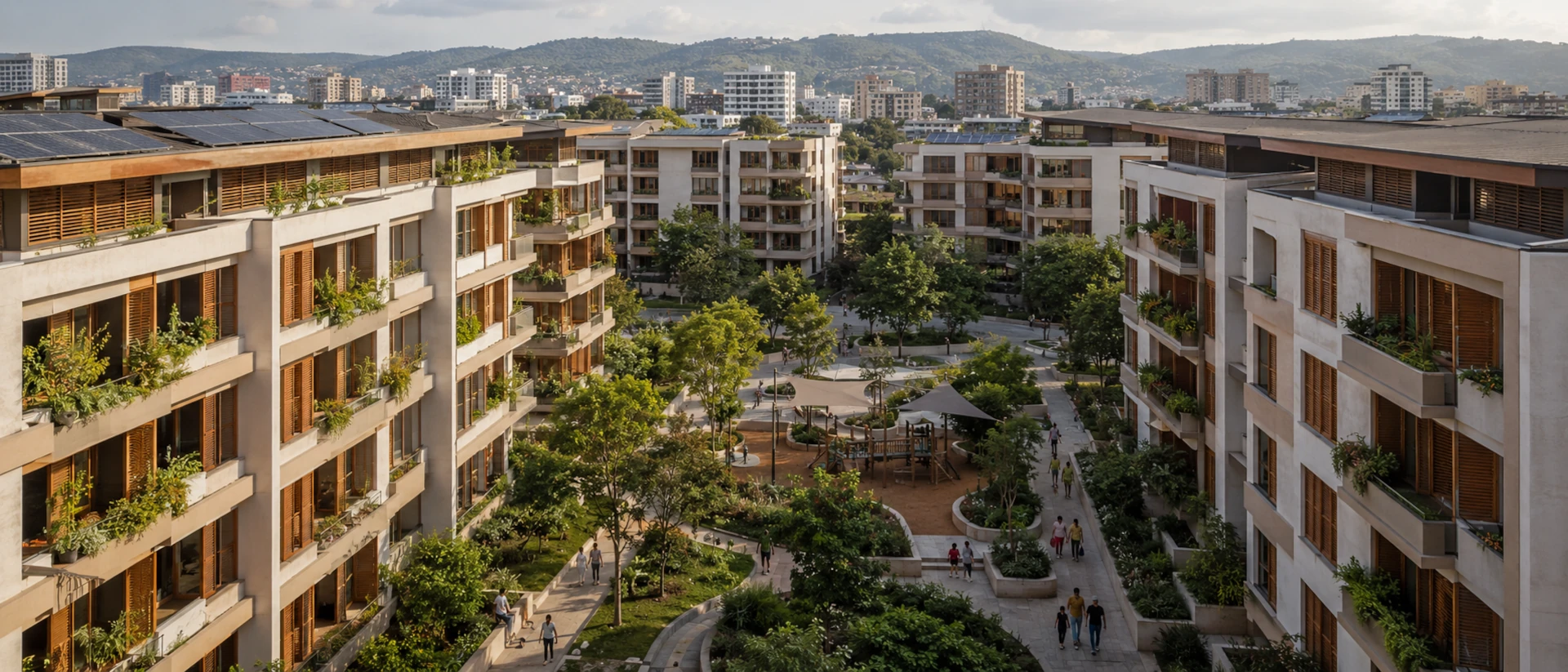
Housing, schools, clinics and public spaces built for heat, flood, fire and access.
The challenge
The built environment is where most climate risk, public-health risk and inclusion outcomes are actually decided, and it is one of the most under-served areas in current urban programmes. Housing supply lags demand by large margins; schools and clinics often lack reliable power, water and accessibility; public spaces are missing where they are most needed. Building codes exist on paper in many countries, but adoption and enforcement remain partial.
Why this matters in African cities now
The World Bank estimates that global building floor area will more than double by 2060, with around 88 billion m² of new construction needed in Africa alone to absorb population growth. World Bank / WRI analysis indicates that roughly 70 percent of African cities face severe climate risks, including heat, flooding and water stress. Among Sub-Saharan countries the World Bank assessed, only five had mandatory building energy codes or standards on record, and only Nigeria and Rwanda had comprehensive codes; the World Bank has since published a continent-wide review of building regulations across 48 countries, with guidance on structural resilience, fire safety, green building and accessibility. Decisions taken on the next wave of construction lock in performance for decades — there is no second chance to build the same building right.
How we think about this topic
We treat the built environment as a system: housing, public buildings, public space, water and sanitation infrastructure, and the codes and procurement practices that govern them. The right starting point is usually a portfolio view — which existing public buildings are critical, which new buildings are coming, and where the gap between code and practice is widest. Climate hazards, accessibility and water/sanitation performance are evaluated together, because they are routinely the same buildings and the same budgets.
What we typically deliver
We help cities and ministries assess and update building codes, design retrofit programmes for public buildings such as schools and clinics, develop resilient public-space and stormwater plans, structure procurement for new public buildings against published performance standards, and connect the buildings agenda with energy (efficiency, hybrid power for critical facilities) and waste (construction and demolition flows). Water, sanitation and hygiene performance is treated as part of the built-environment standard, not a separate brief.
Governance and delivery considerations
The binding constraint is usually not design knowledge but adoption and enforcement: the chain from code to permit to inspection to occupancy. We work with city teams and national ministries on regulatory updates, capacity-building for permitting and inspection, model contracts for public buildings, and the data systems that make code compliance visible. Fire safety, structural resilience and accessibility are written into specifications rather than left to chance, and informal-settlement upgrading is treated as integral to the built-environment portfolio rather than a separate humanitarian track.
How we measure outcomes
We measure built-environment outcomes against safety, performance and access: share of public buildings meeting current resilience and accessibility standards, share of new construction permitted against published codes, share of schools and clinics with reliable water, sanitation and power, and the rate of climate-related damage to public infrastructure over time. The steering question is whether the buildings people depend on actually keep them safe, healthy and included.
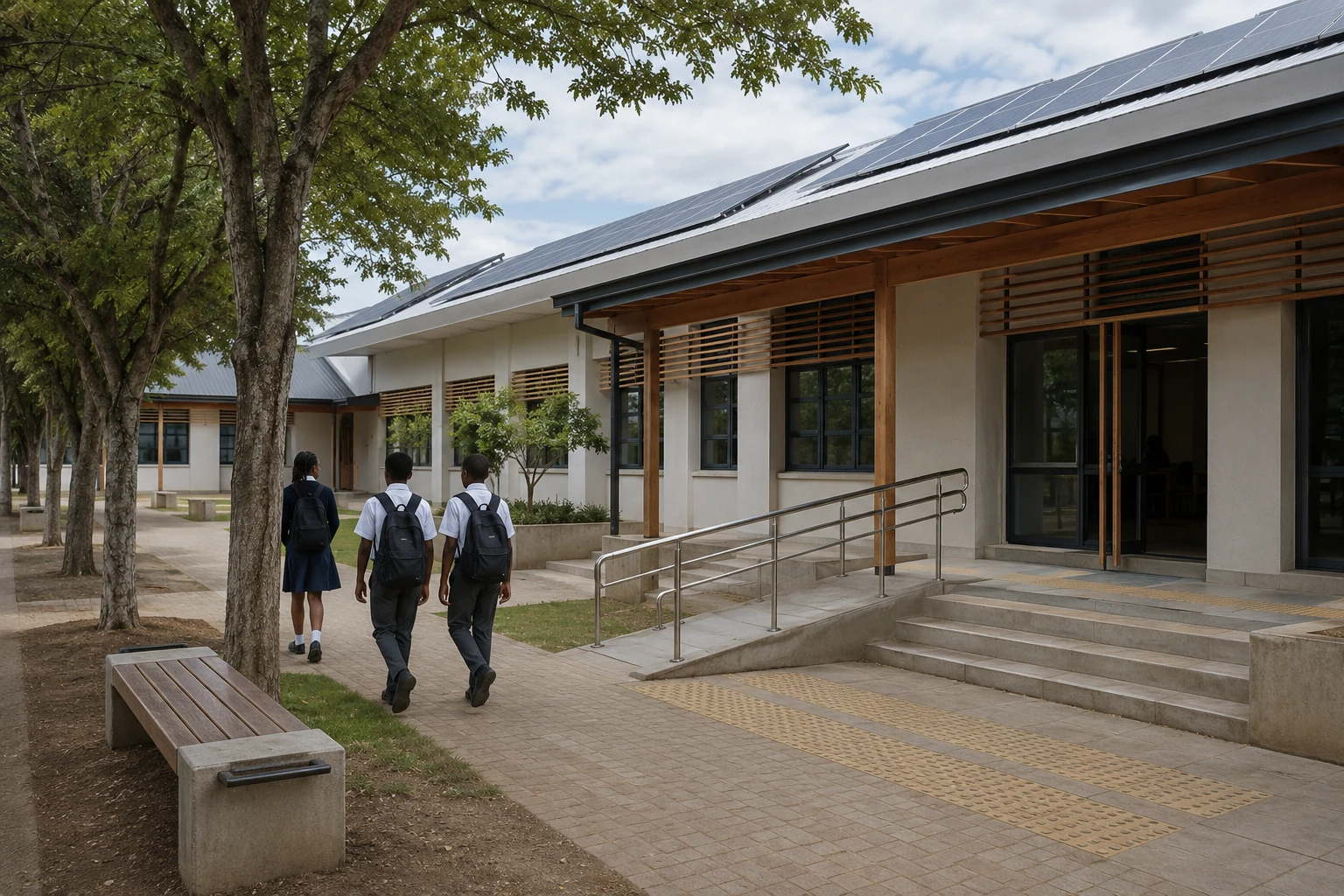
Buildings & Built Environment through four lenses.
-
Resilience & Climate
World Bank / WRI analysis flags that around 70 percent of African cities face severe climate risks. Heat, flood and fire performance need to be designed in, not retrofitted after damage.
-
Inclusion & Access
Public buildings — schools, clinics, transport stops — are where universal accessibility either happens or fails. Codes that include disability access, sanitation and water are the precondition for inclusive cities.
-
Governance & Rights
Among Sub-Saharan countries assessed, only five had mandatory building energy codes or standards on record, and only Nigeria and Rwanda had comprehensive codes. Code adoption and enforcement are governance products.
-
Economic Impact
The World Bank estimates that global building stock will more than double by 2060, with around 88 billion m² needed in Africa alone. Getting buildings right is one of the largest urban investment decisions of the next decades.
Talk to us about buildings & built environment.
Which themes fit best is highly city-specific. Tell us a little about the city, the partners involved, and what kind of decision you're trying to make. We'll come back with the right entry point.