 Smart City Africa
 Responsible AI & Operational Safety
Rights-aware video analytics for traffic safety, controlled access and event verification — within explicit guardrails, not as mass surveillance.
The challenge
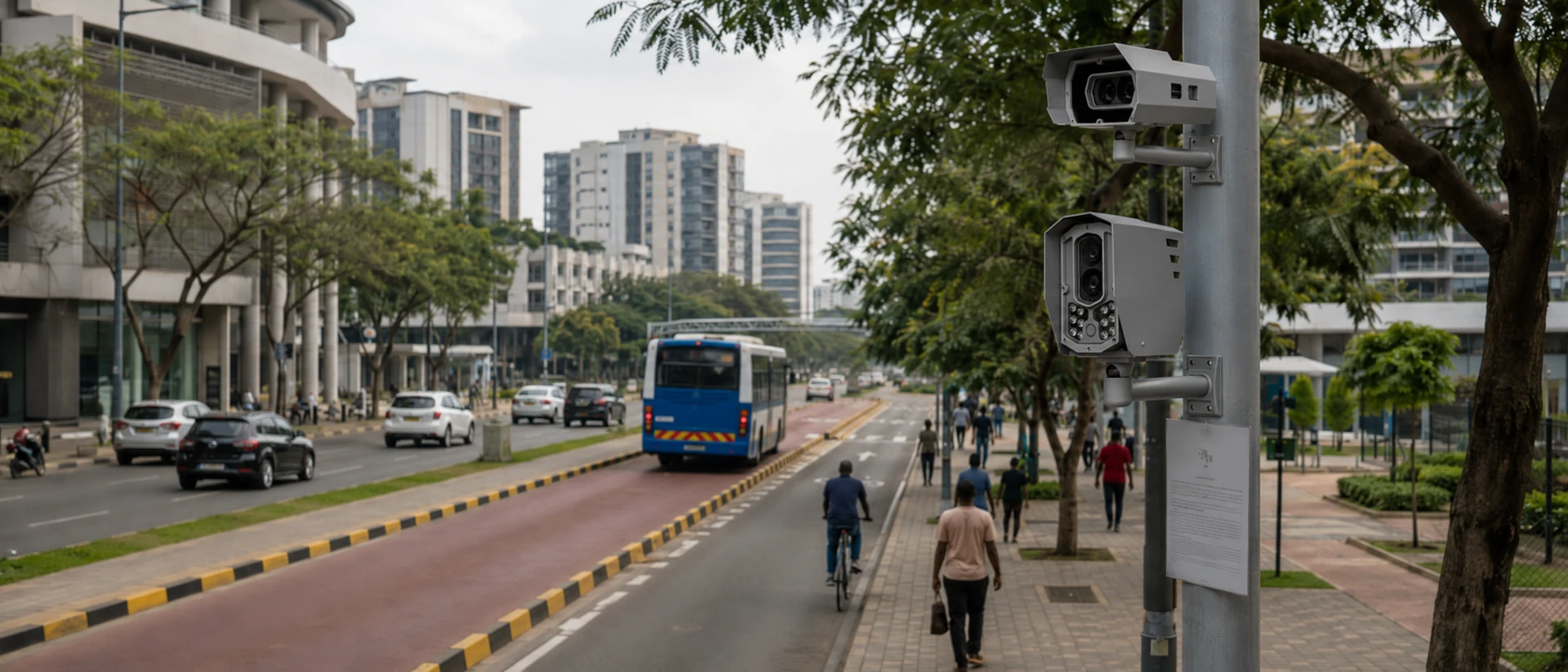
Cities, utilities and infrastructure operators in Africa increasingly face a real operational-safety problem: high traffic-injury rates, depots and substations that are difficult to secure, controlled entry points that still rely on slow manual checks, critical sites that need fast event verification, and rising commercial pressure to deploy “AI” cameras, traffic-enforcement and identity-verification systems without a governance plan. The international evidence base is unambiguous: AI-driven safety and operations analytics can deliver public benefit when use cases are narrow and guardrails are strong, and can damage rights and trust quickly when they are not. UN-Habitat’s people-centred work, the African Union Data Policy Framework and OECD work on AI in the public sector all point to the same conclusion. This page is written to reflect that.
Why this matters in African cities now
Traffic safety, depot and substation security, public-asset protection and event verification are concrete daily problems for city and utility teams. At the same time, a peer-reviewed analysis of African smart-city programmes published through Cambridge identifies data-protection breaches, digital exclusion, surveillance overreach, bias and missing transparency as recurring failures of poorly governed deployments. The opportunity is to capture the operational benefits where they are well evidenced, while declining the use cases that are not. OECD’s work on AI in public procurement notes that most government AI initiatives are still in pilot or exploration phases with limited scaling and limited public documentation — so the rollout posture has to match: pilot, evaluate, document, and only then scale.
How we think about responsible safety analytics
Three principles do most of the work:
- Public benefit, narrowly defined. AI-driven safety and operations analytics is justified by a specific public outcome — fewer crashes on a corridor, faster passport-and-ID processing at a controlled entry point, controlled access at a depot, faster verification of a verified event — and not by a generic “intelligence” promise.
- Rights-respecting by construction. Lawful basis, purpose limitation, data minimisation, retention limits, public notice, human review and audit trails are part of the system from day one. They are not bolted on after deployment.
- Pilot before scale. Every deployment starts with a clearly bounded pilot, runs against a baseline, is independently evaluated, and either scales with documented evidence or is wound down.
We work with the technology categories that are commercially mature in this space — automatic number-plate recognition (ANPR/LPR), document and identity reading at controlled entry points, electronic tolling and parking compliance, traffic and zone enforcement, access control, video-management-system integration, edge and on-prem deployments, event search across video — and integrate them into existing camera, counter-service and IT estates rather than rebuilding from scratch.
Use cases we work on
The use cases are deliberately limited and tied to a public function:
- Traffic safety and zone enforcement. Speed-zone, low-emission-zone and bus-lane enforcement on defined corridors; school-zone protection; freight-curfew compliance.
- Tolling, parking and freight-corridor enforcement. Electronic tolling on defined corridors, parking-compliance management, freight-curfew checks and weighbridge processing — with documented retention rules and complaint paths.
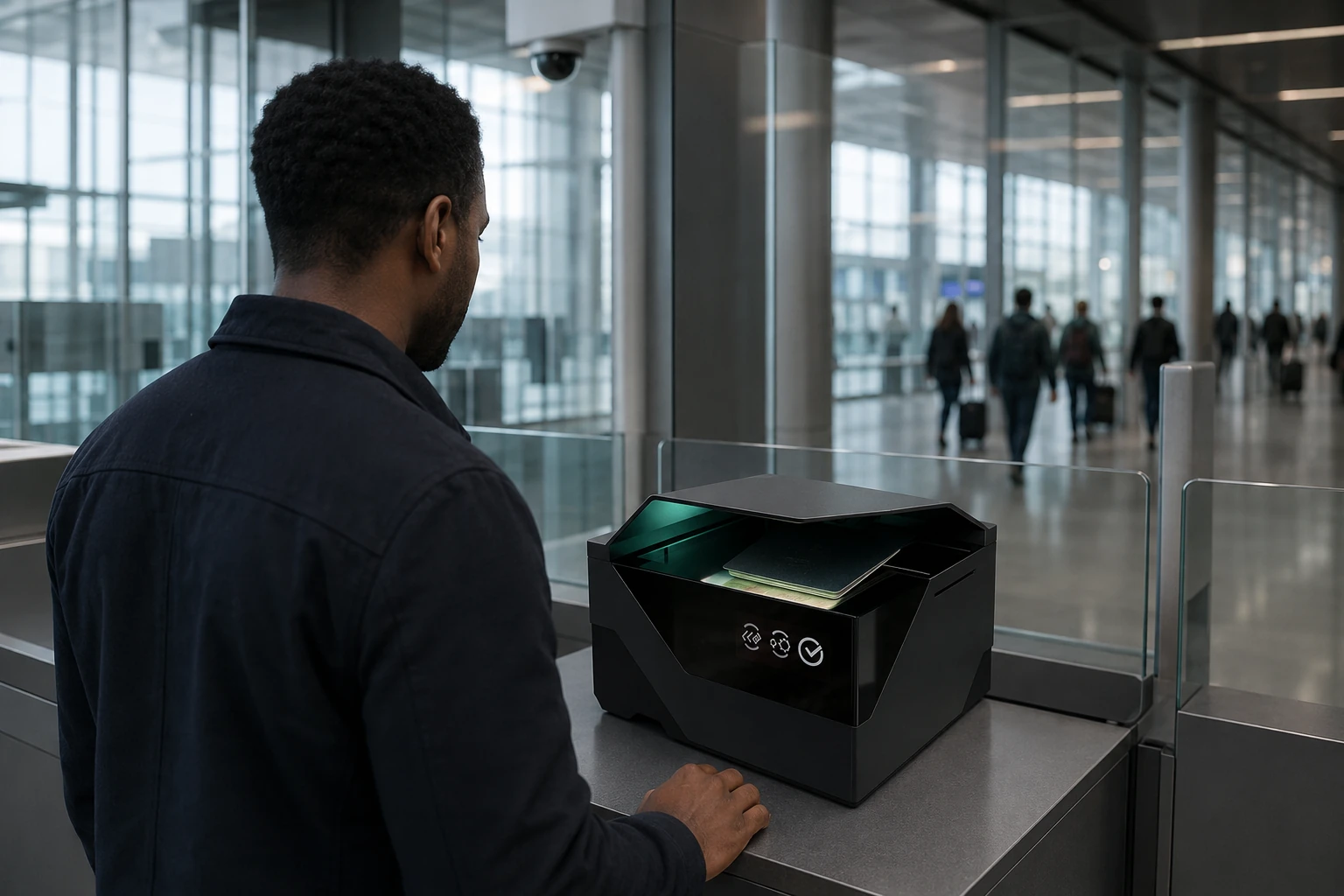
- Identity and document verification at controlled entry points. Passport and national-ID document reading at border posts, citizen-service kiosks, depot entries and other defined entry-control settings — authentication of a presented document against its holder, with logged human review, lawful basis and explicit purpose. Authentication, not surveillance.
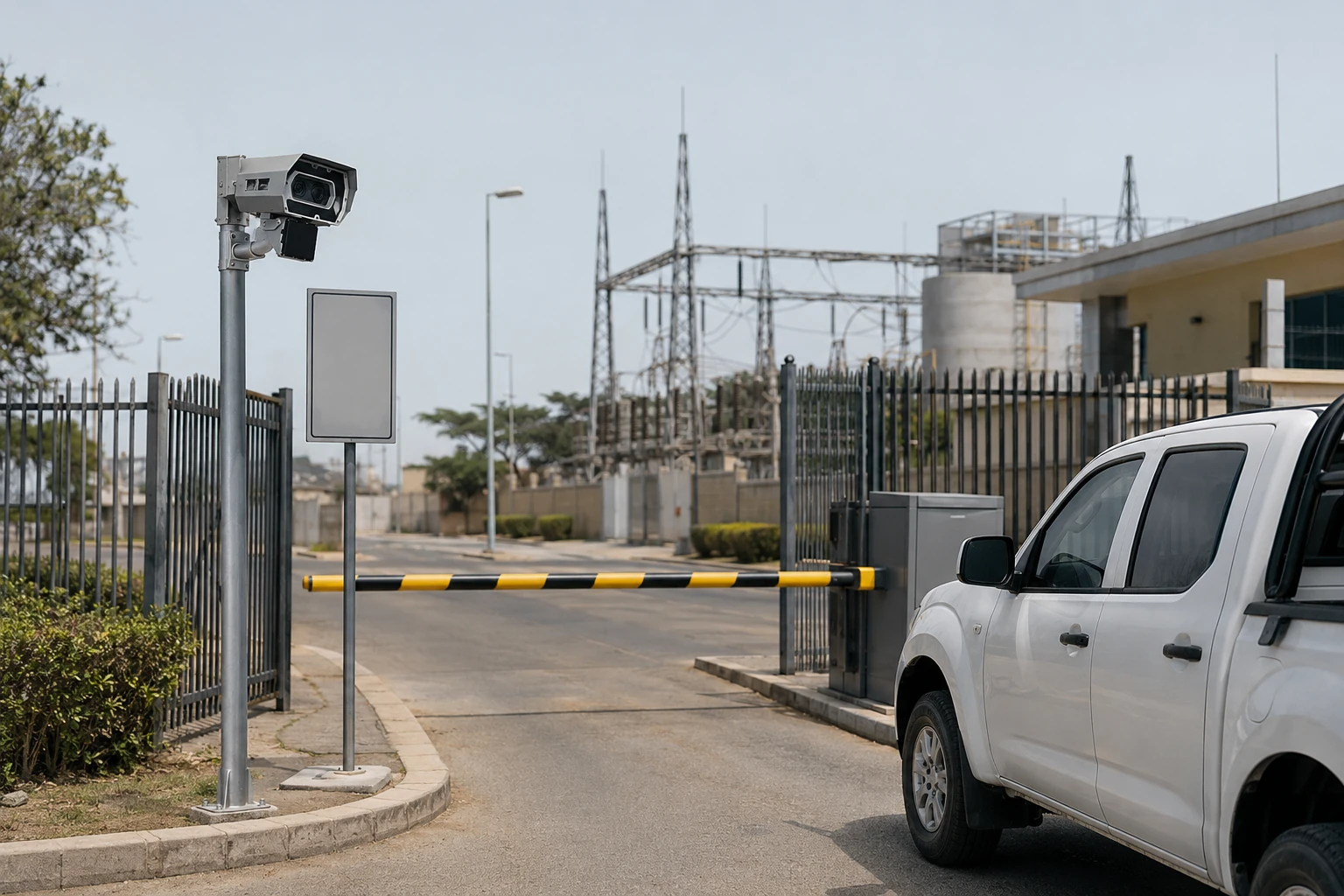
- Controlled access for critical sites. Vehicle access control for utility depots, substations, water pumping stations, transport facilities, public buildings.
- Vehicle and contractor management. Fleet entry and exit logging, contractor-vehicle accountability, audit trails for incident investigation.
- Operational integrity at fixed sites. Perimeter monitoring on industrial or utility sites against documented threat patterns, with fail-safe and degraded-mode behaviour.
- Event verification and search. Search across recorded video for a specific verified event (e.g. an incident reported through a complaint channel), with logged human review.
Each use case is scoped with the operator and the relevant rights-holder authority before any system goes live.
Camera and document analytics in operation — a supplier reference reel covering identity and document reading, tolling and parking, and traffic-corridor enforcement. Illustrative; every deployment is scoped against the guardrails below.
Compliance guardrails
For every active use case, the deployment carries the following layers — in line with UN-Habitat, AU and OECD guidance:
- Lawful basis and purpose limitation. Documented legal grounds, named purpose, no scope creep without re-assessment.
- Data Protection Impact Assessment. Completed before deployment, including a discrimination and bias review where data-driven matching is involved.
- Data minimisation and retention. Smallest data set sufficient for the purpose, shortest retention sufficient for the operational need, documented deletion.
- Public notice and signage. Visible, plain-language notice on what the system does, why, and how to query or complain.
- Human review. No automated decision with significant effect is taken without a logged human-review step.
- Auditability. Access logs, configuration history and review records are kept and made available to the relevant oversight body.
- Procurement guardrails. Transparency, non-discrimination, explainability, exit and portability, and vendor-lock-in protection are written into procurement contracts (consistent with OECD work on AI in public procurement).
- Community engagement. A defined complaint and information path before, during and after deployment.
Pilot logic
We operate on a five-stage rollout:
- Discovery and guardrails. Target outcome, target groups, permitted use cases, DPIA, notice and procurement setup.
- Pilot. One or two corridors or sites; baseline measurement; community communication.
- Evaluation. KPI review, bias and false-alarm review, cost-benefit, governance adjustment.
- Scale. Extension to further sites or partners, interoperability, support and operating model.
- Institutionalise. Standards, transparency reports, audit cycles, content updates on the public-facing notice page.
Skipping straight from discovery to scale is the failure mode the OECD review of government AI projects describes in detail; we do not do it.

How we measure outcomes
The defensible KPIs are operational and rights-aware:
- Operational performance. Mean time to verify a reported incident; mean processing time at controlled entry points and tolling lanes; cost per processed event compared with the documented manual baseline; false-positive rate on flagged events; uptime on edge nodes; coverage of agreed zones.
- Safety outcomes. Change in reported incidents, injuries or unauthorised access events on equipped corridors and sites, against a published baseline.
- Governance proof points. Share of deployments with a completed DPIA, public notice, documented retention, logged human review and recorded community-engagement steps; number of access requests and complaints handled, and time to resolution.
- Independent review. Frequency and outcome of independent audits.
Wider Africa-level evidence on outcomes such as crime reduction through such systems is unspecified in the public record we trust; we therefore measure what we can defend, and design pilots so that any wider claims can be built up over time on the city’s own data — or retracted if the pilot does not support them.
Responsible AI & Operational Safety through four lenses.
-
Resilience & Climate
Operational safety systems are part of how a city absorbs shocks: traffic-flow control around closed roads, faster verification of incidents at depots and substations, fail-safe and degraded-mode behaviour at edge sites when power or backhaul fluctuates. Resilience is a design property, not a marketing feature.
-
Inclusion & Access
Safer streets, working access control and quicker incident verification matter most to people who already carry the heaviest urban risk — pedestrians, women, children, older people and people with disabilities. The same systems also carry the highest exclusion risk if they are deployed without limits, so use cases are scoped narrowly and with community input.
-
Governance & Rights
This is the binding constraint. UN-Habitat, the African Union Data Policy Framework and OECD work on AI in public procurement converge on the same requirements: clear lawful basis, purpose limitation, data minimisation, retention rules, public notice, human review, exclusion of unlawful uses, and community-accessible documentation. A peer-reviewed Cambridge analysis of African smart-city programmes flags data-protection breaches, digital exclusion, surveillance overreach, bias and missing transparency as recurring failure modes — those are the risks the design has to engineer against.
-
Economic Impact
The defensible economic case sits in measurable operational outcomes: fewer traffic incidents on equipped corridors, faster event verification, faster processing at controlled entry points and tolling lanes, time and staffing savings against documented manual baselines, lower depot and substation downtime, lower insurance and replacement costs. Generic "crime reduction" claims are not supported by the available African evidence base and are not used here.
Talk to us about responsible ai & operational safety.
Which themes fit best is highly city-specific. Tell us a little about the city, the partners involved, and what kind of decision you're trying to make. We'll come back with the right entry point.