 Smart City Africa
 Water & Sanitation
Safe drinking water, sanitation and reuse — centralised and decentralised systems, with monitoring and operating models that hold up under climate and growth pressure.
The challenge
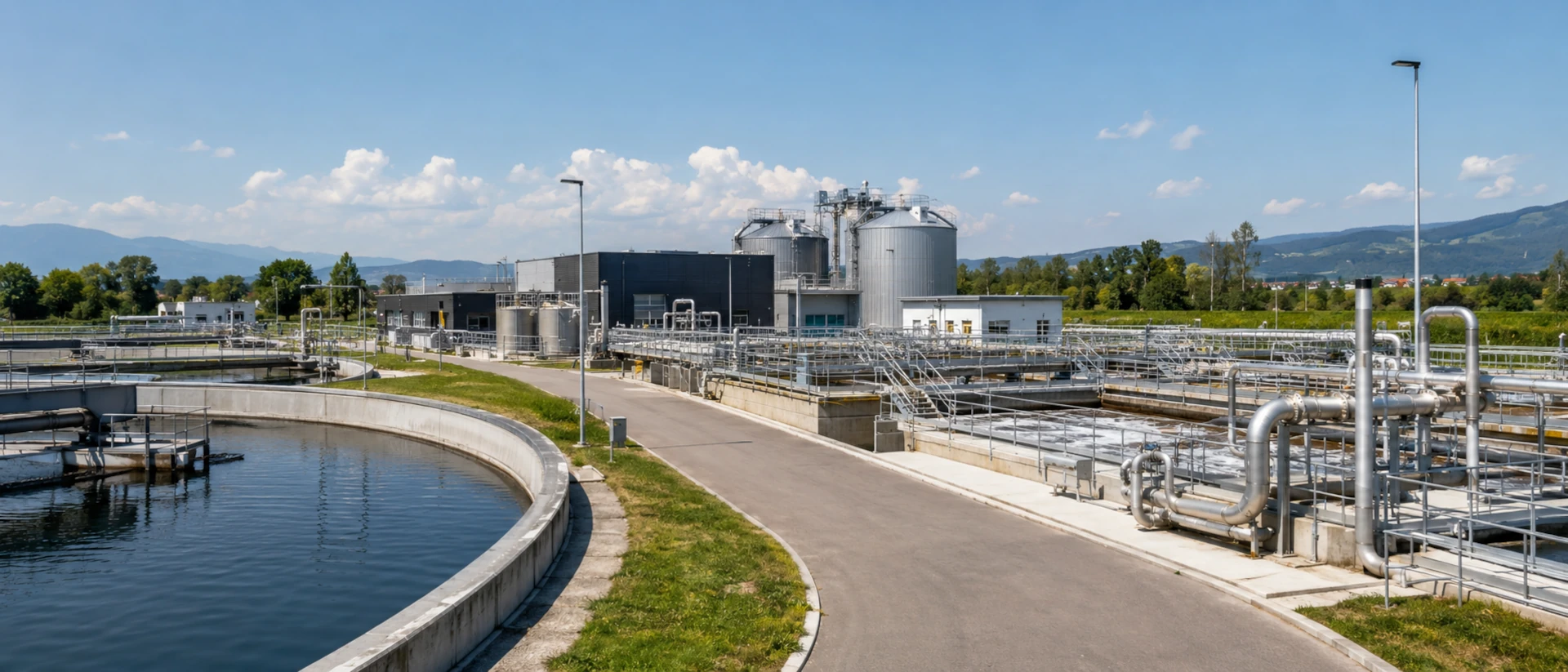
Water and sanitation systems are foundational infrastructure for public health, economic activity and climate resilience. In many African cities, demand, climate stress and operating pressure are growing faster than networks, treatment capacity and service organisations can absorb. The honest reframe is to stop treating water as one large pipe-laying project and to start treating it as a portfolio of services: drinking-water quality at the tap, sanitation across formal and informal settlements, drainage during intense rainfall, safe reuse where the water balance is tight, and a monitoring and operating model that holds up over the asset life.
Why this matters in African cities now
The data points line up. WHO and UNICEF JMP 2024 figures put safely managed drinking water at around 32 percent of the population in Sub-Saharan Africa, well below the global average. World Bank work on water-utility performance in Africa shows that only about one third of the urban population has a piped household connection, with persistent non-revenue-water losses, intermittent supply and weak metering across most utilities. UNECA’s African Sustainable Development Report 2026 quantifies the financing gap on the order of USD 64 billion per year for water security and universal sanitation. At the same time, UN-Habitat is explicit that water, sanitation, drainage, solid waste and street design are one urban system — they fail together when one part fails — which is why this work is anchored to a clear public-health-first frame.
How we think about this topic
Three principles do most of the work:
- Public health first. Drinking-water quality, sanitation safety and reuse risk are non-negotiable. WHO Water Safety Plans, Sanitation Safety Planning and the WHO Guidelines for Drinking-water Quality are the working baseline.
- Technology-agnostic, application-sensitive. Centralised and decentralised options each have a place. The right answer depends on raw-water quality, network condition, demand profile, operating capacity and climate exposure — not on a default product. Vendor-neutral technology categories are documented separately on the Technology & Components page.
- Affordability-aware. Tariff design, lifeline blocks, donor and PPP routes are part of the design space from day one, not bolted on after the engineering is finished.
Centralised and decentralised systems
Most viable plans combine both:
- Centralised treatment and trunk distribution. The right answer where raw-water source, network and demand are predictable enough to amortise the capital cost. Strengths: economies of scale, lab and operating capability concentrated in one place. Constraints: civil works, civic disruption, longer lead times, and asset risk concentrated in a single chain.
- Decentralised and modular systems. Particularly relevant for new districts, rapid peri-urban growth, remote sites and operational redundancy at critical institutions. Strengths: shorter deployment, distributed redundancy, ability to match treatment to local raw-water and reuse needs. Constraints: O&M and spare-parts logistics, operator capability, integration into the wider utility’s reporting and tariff regime.
Picking between them is rarely a single decision; the engagement usually defines a portfolio of centralised upgrades, decentralised top-ups and emergency / mobile capacity for shocks.
Treatment building blocks at a glance
Detailed application notes, limits and operating requirements live on the dedicated Technology & Components page. At the solution level the recurring building blocks are:
- Membrane bioreactors (MBR). Strong on effluent quality and reuse readiness; capital and operating costs are higher and operator capability is non-trivial. Continent-wide, comparable cost and suitability data are unspecified in the primary sources we trust.
- Sequencing batch reactors (SBR). An established option for variable loads, but with real O&M, sludge-handling and operator-capacity demands.
- Disinfection — chlorination and UV. Core building blocks for drinking-water and reuse polishing. Both have known limits and are typically combined with upstream treatment, not used alone.
- Desalination. Regionally relevant, but energy-intensive and operationally demanding; assessed against the energy plan (see Energy) rather than as a standalone fix.
- Package plants and mobile units. Useful for transitional, emergency and specialised contexts; the field record shows they often fail not on technology but on O&M, spare parts and integration into the wider utility’s processes.
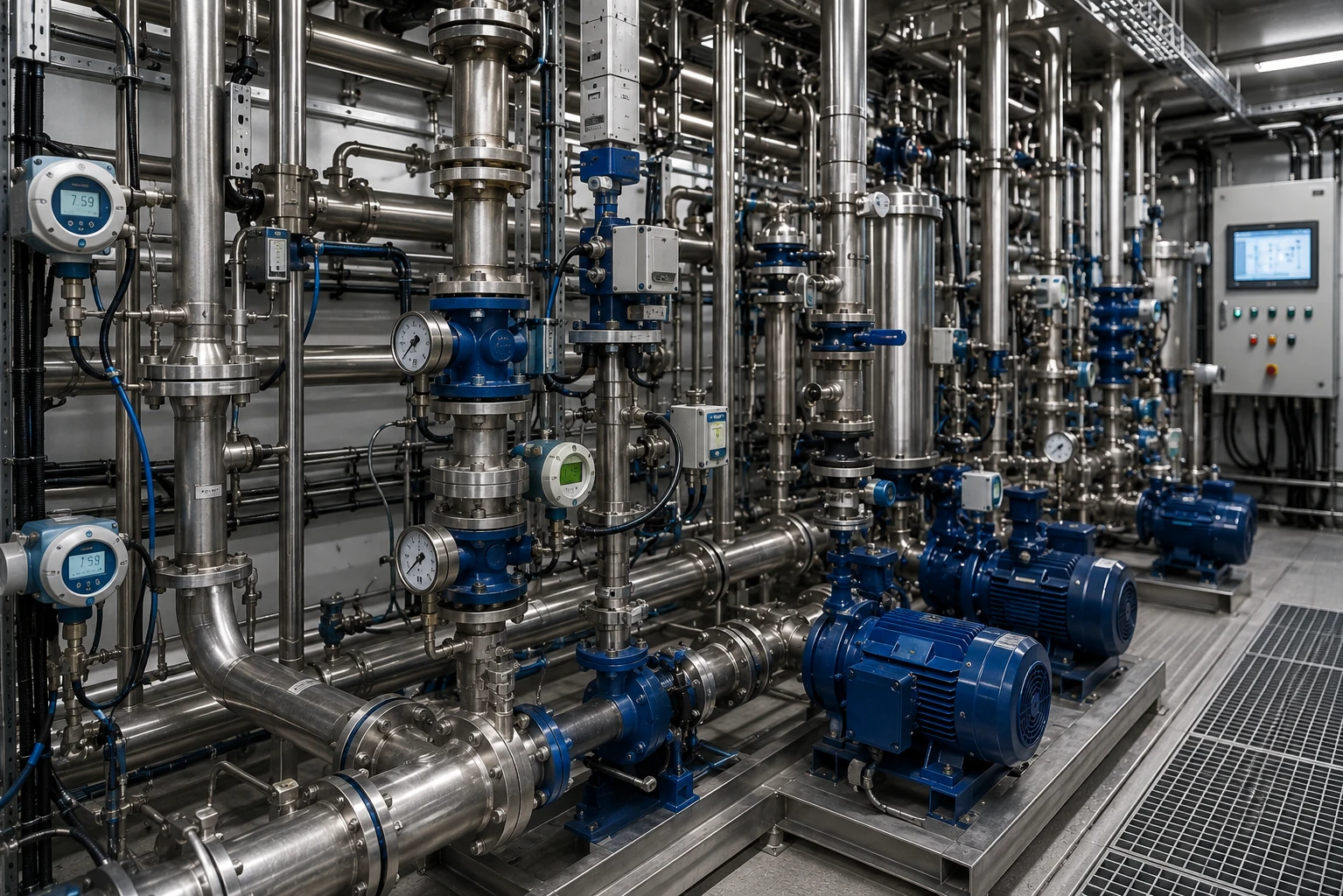
- Sensors, telemetry and SCADA. Improve visibility, alarming and operational control. They support — but do not replace — laboratory testing and governance.

Monitoring and operations
Working drinking-water and sanitation services need a credible monitoring layer, not just a dashboard screenshot. We design for:
- Source-to-tap visibility. Raw-water status, treatment process parameters, residual chlorine / UV dose, distribution pressures, customer-side complaints.
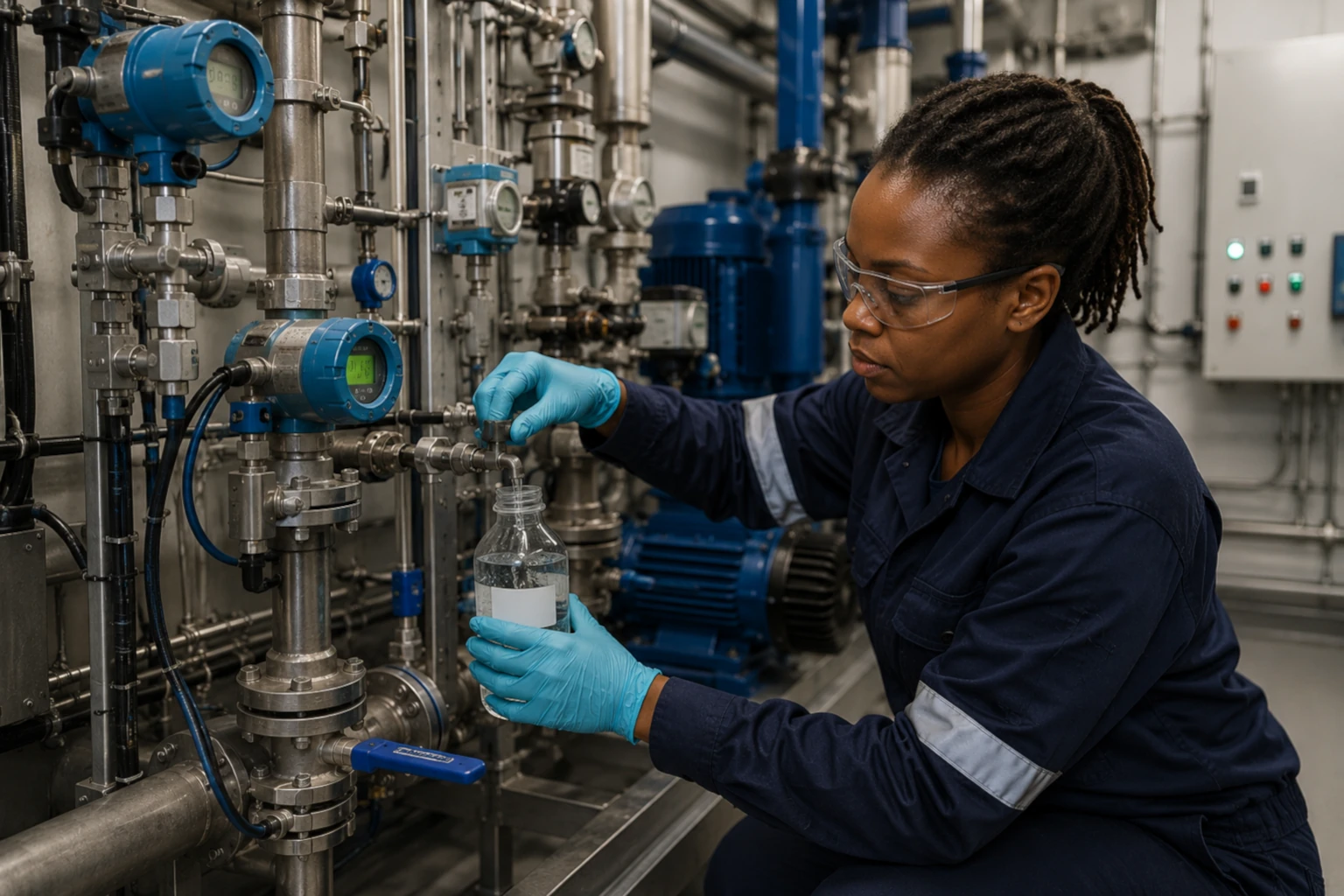
- Laboratory testing and accredited sampling. Routine and event-driven, documented and escalated against WHO Guidelines for Drinking-water Quality and national standards. Local water-quality and discharge standards are project-specific and must be confirmed per market.
- Operator capability. Spare-parts logistics, scheduled maintenance, vendor-neutral training, and clear escalation between the utility and any service partners.
- Dashboards as a working tool. Sensible fields include source flow and turbidity, pH, conductivity / TDS, residual chlorine / UV status, ammonia / nitrate, energy and chemical consumption, alarms, lab results, downtime, sludge volumes, reuse volumes and complaint cases (drawing on the IWA Digital Water frame and WHO GDWQ).
Reuse pathways
Wastewater reuse is increasingly part of the operating answer in water-stressed regions and in growing districts where the water balance is tight. The defensible posture is project-specific: reuse type (industrial, irrigation, indirect potable), upstream treatment train, downstream monitoring, regulatory framing and community communication are decided together. WHO Sanitation Safety Planning provides a working method for evaluating and managing the residual health risks; concrete continent-wide performance data on reuse projects in Africa are unspecified and should be generated through pilot evaluation.
Governance, procurement and delivery
Procurement and delivery model decide whether plants and networks still work years after commissioning. The recurring routes are EPC and Design-Build (capital project, operator transfer afterwards), DBO and O&M (the operator carries operational risk), donor-financed tenders (AfDB / African Water Facility frameworks for project preparation, feasibility, ESIA / RAP, tender documents, PPP advisory) and — where genuinely useful — PPP structures. AfDB and AWF emphasise project preparation, feasibility, environmental and social impact assessment, tender documentation and catalytic pilots; we treat that pre-procurement work as the binding constraint, not as a tick-box phase. Vendor-neutral specifications, exit and portability terms, spare-parts and lock-in protections are written into contracts from day one.
Compliance notice
Lawful operation and public trust depend on a documented, project-specific compliance basis: WHO Guidelines for Drinking-water Quality and Water Safety Plans for drinking-water systems; WHO Sanitation Safety Planning for sanitation and reuse; national or city drinking-water, discharge and reuse standards; effluent permits, sludge-handling rules, worker safety, chemicals management and noise / odour limits. Local standards and permit conditions vary by country and by site and must be confirmed up front, not assumed.
What we typically deliver
Engagements usually combine a subset of: a water and sanitation strategy paired against the city’s energy, drainage and built-environment plans; portfolio design across centralised, decentralised and emergency capacity; a vendor-neutral technology and procurement specification; a monitoring and SCADA architecture aligned with WSP / SSP; a reuse pathway with the corresponding governance and community communication; a procurement and PPP / donor financing route (EPC, DBO, O&M, AfDB / AWF support); and a Discovery → Pilot → Evaluation → Scale → Institutionalise rollout that produces a defensible audit trail at each step.
How we measure outcomes
We measure water and sanitation work against safe service, not headline coverage:
- Compliance rate against WHO GDWQ and national drinking-water and discharge standards.
- Plant availability and uptime on key process steps; mean time to detect and resolve incidents.
- Share of safely treated and reused volumes against the design baseline.
- Coverage and connection at priority anchor institutions — schools, clinics, public buildings.
- Complaint cases logged, investigated and resolved, with documented response times.
Continent-wide, comparable performance benchmarks for many of these are unspecified in the primary sources we trust; we therefore design pilots so the city’s own data can support — or correct — wider claims over time.
Water & Sanitation through four lenses.
-
Resilience & Climate
Water security is climate adaptation in practice. Resilient intakes, redundant treatment lines, drainage that copes with intense rainfall, and safe reuse during dry spells decide whether services keep running through floods, droughts and heat — not the other way around.
-
Inclusion & Access
WHO and UNICEF JMP 2024 figures put safely managed drinking water at around 32 percent of the population in Sub-Saharan Africa, with sharp urban–rural and sub-regional gaps. The World Bank reports that only about one third of the urban population has a piped household connection, leaving informal settlements, women, children and people with disabilities to carry the heaviest cost of intermittent supply, contaminated sources and weak sanitation.
-
Governance & Rights
Drinking water and sanitation services live or die by clear rules and credible monitoring. WHO Water Safety Plans (WSP) and Sanitation Safety Planning (SSP), national drinking-water and discharge standards, transparent tariffs and accessible complaint paths are the governance backbone — not optional add-ons. Procurement guardrails (EPC, DBO, O&M, PPP) decide whether the asset still works five years after handover.
-
Economic Impact
UNECA ASDR 2026 points to a continental financing need on the order of USD 64 billion per year for water security and universal sanitation. Unsafe water and weak sanitation translate into lost work and school days, treatment costs and infrastructure damage from flooding; resilient utilities, decentralised top-up systems and safe reuse are how cities convert that drag into delivered services.
Talk to us about water & sanitation.
Which themes fit best is highly city-specific. Tell us a little about the city, the partners involved, and what kind of decision you're trying to make. We'll come back with the right entry point.