 Smart City Africa
 Telecommunications & Internet
Mobile, fiber and FWA infrastructure for public administration, utilities and the wider economy — affordability, resilience and reach as one picture.
The challenge
Cities only run digitally if their networks, sites and service points are planned to carry the load. Telecommunications and internet infrastructure is therefore not a separate “tech layer” — it is foundational urban infrastructure, on the same plane as roads, power and water. In African cities the question is rarely whether some signal exists, but whether the right mix of mobile, fiber and fixed wireless reaches schools, clinics, municipal buildings, depots and small businesses at a price the city and its residents can sustain.
Why this matters in African cities now
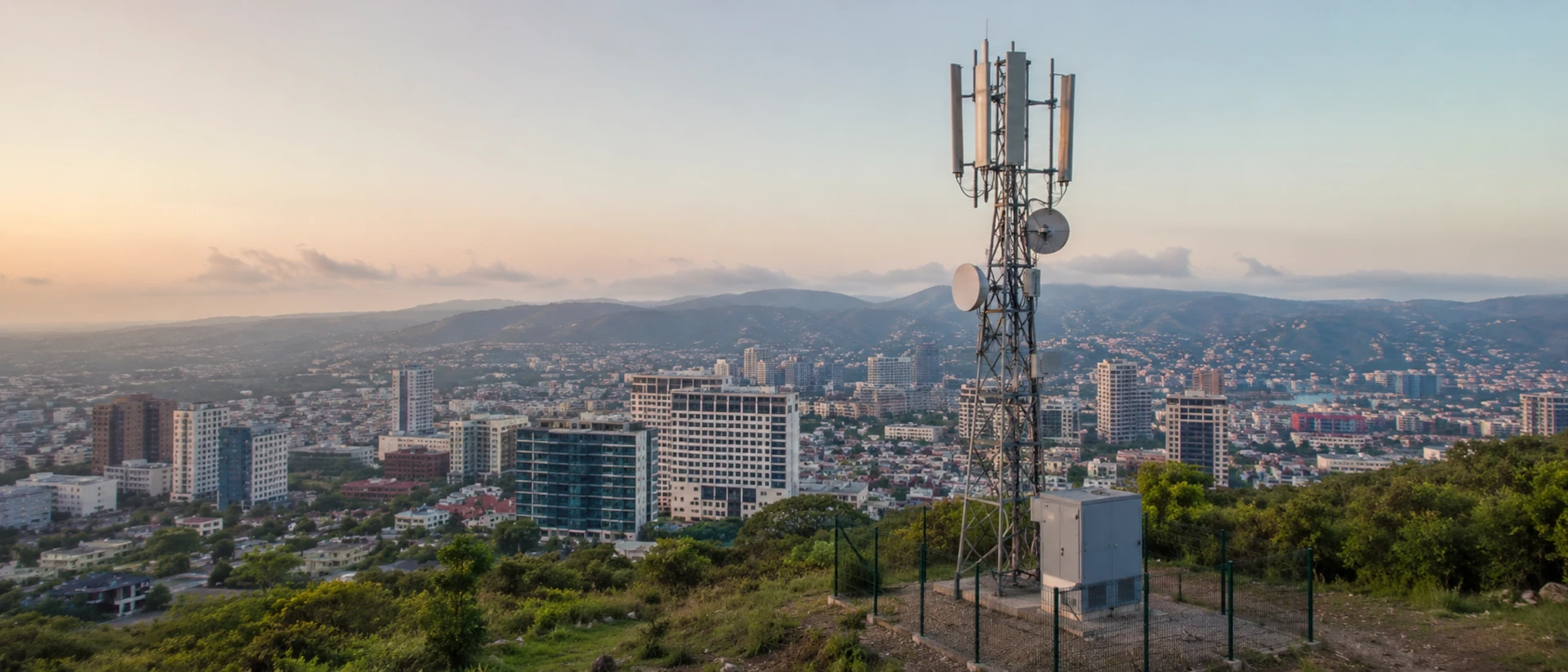
Coverage on its own no longer tells the story. ITU’s 2024 broadband review puts mobile broadband coverage in Africa at around 86 percent of the population, while about 14 percent — and around 25 percent of rural residents — have no realistic possibility to connect at all. Where coverage exists, affordability decides who actually uses it: a 2 GB mobile basket runs at roughly 4.2 percent of monthly per-capita income, and a fixed broadband line at around 15 percent. UNECA frames Africa’s digital transformation along four dimensions — infrastructure, affordability, skills and e-government — and shows infrastructure and affordability as the recurring brake on the other two. At the same time, GSMA reports that 25 African operators have launched commercial 5G fixed wireless access, which opens a real alternative route to fixed-grade connectivity for institutions in places fiber will not reach soon.
How we think about this topic
We treat telecommunications as the digital base layer of the city — sized for institutions and the wider economy, not just for individual subscribers. The starting point is usually a service-by-service map: which public functions and economic activities depend on which kind of connectivity, at which uptime and price, and which households and businesses are practically excluded today. From that map we work outward to the right infrastructure mix (mobile, fiber, fixed wireless), to anchor-institution links (schools, clinics, municipal buildings, utilities), and to the regulatory and financing arrangements that decide whether the network actually gets built and stays affordable. ITU, UNECA and GSMA evidence is used as the working baseline — no invented figures.
Infrastructure options at a glance
Three building blocks usually need to be combined:
- Mobile broadband. The dominant access channel for households and small businesses. Strengths: ubiquity and incremental upgrade paths. Constraints: capacity per site, backhaul resilience, and affordability of the device-and-data combination.
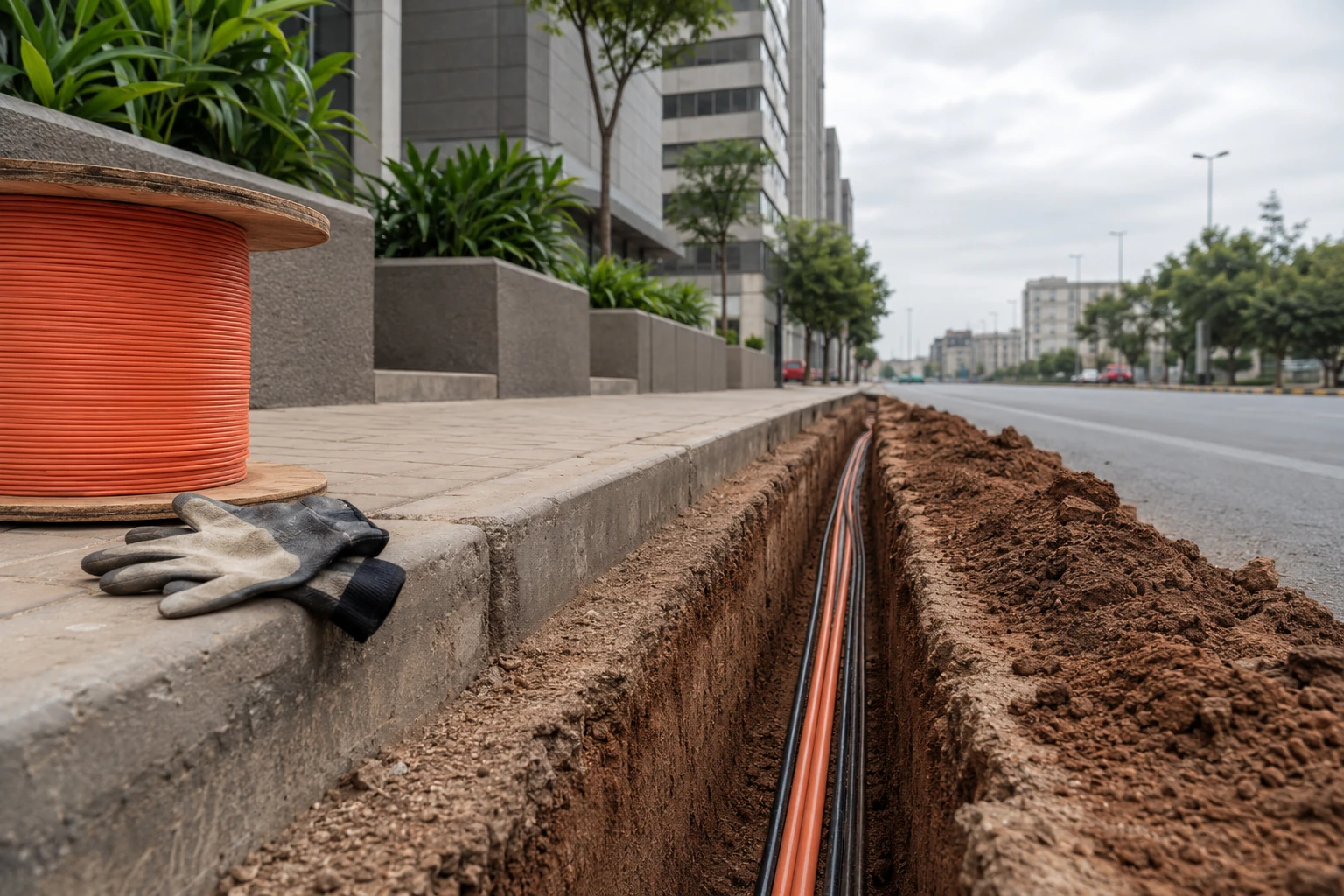
- Fiber. The long-life backbone for utilities, anchor institutions and dense business districts. Strengths: capacity and stability. Constraints: civil-works cost, right-of-way coordination, and break-even economics outside denser corridors.
- Fixed wireless access (5G-FWA and earlier generations). A pragmatic middle path for clinics, schools, municipal sites and SMEs in places where fiber is not financeable yet. Strengths: deployment speed and reuse of the existing mobile site grid. Constraints: spectrum availability and contention with mobile traffic.
Most viable plans use all three, sequenced by location, cost and resilience need.
Anchor institutions: where to start
For city teams under fiscal pressure the most defensible first step is an anchor-institutions plan: schools, clinics, municipal offices, water and energy utilities, transport control rooms. Connecting these sites at adequate uptime and capacity unlocks digital public services, telemedicine, remote learning and operational telemetry — and creates predictable demand that improves the economics of the underlying network. We help cities scope the institutional list, define connection standards, sequence procurement, and structure the financing so that anchor-institution connectivity is a capital programme, not a string of one-off contracts.
Spectrum and regulatory note
Spectrum and licensing decisions sit upstream of every infrastructure plan. Most of the levers — release of low-band and mid-band spectrum for mobile, infrastructure-sharing rules, dig-once and right-of-way regimes for fiber, fixed-wireless allocations, universal-service contributions — are national or regulator-level. We treat them as part of the design space: cities cannot move them alone, but they can articulate the constraints that regulators and ministries need to address for a city plan to be deliverable. Where useful, we help city teams formulate that ask and engage with national regulators, donors and operators around it.
What we typically deliver
We help city, utility and donor teams write network strategies that combine mobile, fiber and FWA into one coherent plan; structure FWA or fiber pilots for anchor institutions; design connectivity-affordability programmes for low-income households and small businesses; and translate connectivity needs into procurement specifications, PPP structures or donor financing routes. Where useful we connect the connectivity work to the energy plan (resilient power for telecom sites and digital service points), to the urban governance workstream (digital public services, interoperability, procurement) and to operational safety where camera and access systems share the same backbone.
Governance and delivery considerations
Trustworthy connectivity depends on choices that are not narrowly technical: open-access versus closed-network models, infrastructure-sharing rules, data-protection regimes, accessibility and language requirements for digital interfaces, and procurement clauses that prevent vendor lock-in. The African Union Data Policy Framework, ITU’s broadband policy work and UN-Habitat’s people-centred guidance set the working baseline. Cybersecurity and data-protection are designed in from day one, not retrofitted; donor and PPP routes are evaluated against the city’s fiscal capacity rather than idealised investor preferences.

How we measure outcomes
We measure telecommunications work against meaningful access, not headline coverage: share of priority anchor institutions connected at the agreed standard; cost per connected site over the asset life; uptime and latency on critical links; affordability of an entry-level basket relative to local income; and the share of households and businesses in target areas with a usable connection. As proof points on the public side we use ITU’s 86 percent / 14 percent coverage and 4.2 percent / 15 percent affordability figures, plus GSMA’s data on the mobile sector’s economic weight and on commercial 5G-FWA deployments. Where evidence is thin — for example on the wider productivity impact of connectivity in a specific city — we say so and design the pilot to generate it.
Telecommunications & Internet through four lenses.
-
Resilience & Climate
Networks carry early warnings, payments and continuity of services through climate shocks. Resilient backhaul and reliable power for telecom sites — towers, exchanges, anchor links — sit inside the climate adaptation stack, not next to it.
-
Inclusion & Access
ITU 2024 figures put mobile broadband coverage in Africa at around 86 percent, but roughly 14 percent of the population still has no possibility to connect, rising to about 25 percent in rural areas. Affordability is the binding constraint that follows: the median entry-level mobile basket costs about 4.2 percent of monthly per-capita income, and fixed broadband around 15 percent — well above the UN Broadband Commission target of 2 percent.
-
Governance & Rights
Spectrum allocation, licensing, infrastructure-sharing rules and data-protection regimes decide who can build, who can afford and who can be tracked. The African Union Data Policy Framework asks regulators to protect a secure, trustworthy digital space — that has direct consequences for how telecom infrastructure is procured and operated.
-
Economic Impact
GSMA estimates the mobile sector generated about USD 140 billion of economic value in Sub-Saharan Africa in 2023 and supported around 3.7 million jobs directly and indirectly. Twenty-five African operators have already launched 5G fixed wireless access commercially, opening a new route for institutional connectivity where fiber economics do not work.
Talk to us about telecommunications & internet.
Which themes fit best is highly city-specific. Tell us a little about the city, the partners involved, and what kind of decision you're trying to make. We'll come back with the right entry point.